Table of Contents
Liminal space [lim-uh-nl speys]/ ˈlɪm ə nl ˈspeɪs /. a state or place characterized by being transitional or intermediate in some way
When first I heard the term liminal space, I was not sure what to make of the concept. It’s commonly used to describe in-between spaces in architecture that connect two different destinations. But the term kept appearing in pieces to convey the uncomfortable feelings that come with transitions; around unknowing, discomfort, anxiety, and the hard parts of life.
Career transitions as a liminal space.
Changing career paths are one of the most common liminal spaces we encounter. Market disruption, experiencing burnout, seeking higher income, wanting more rewarding or challenging work are forces that set people on this path of transition. Many are navigating this with AI and market disruption.
You might feel dizzy shifting through the possibilities, you might feel rushed on a timeline, you might make decisions just to end the uncertainty. When navigating my own career, I considered many different paths and eventually landed on public health due to its flexibility. In a sense, I needed to be a generalist – to be able to dance with different decisions and possibilities.
And I discovered early on that the field of public health has always lived in a liminal space. Changes in federal funding or shifts in priorities have shaped the field throughout its evolution and how professionals work within it. The same is true for other fields as well.
learn more about the career pattern blueprint
Two Stories of Transition: How People Find Their Way
In 2026, I was navigating my second layoff within a 2 year span from a learning design role. I found myself in another liminal space – job searching, mass layoffs plus the integration of AI, and healing from disappointing experiences within my rugby team (more on that in another piece). I started building tools as a passion project that came from a place of curiosity and a space to navigate some of those more personal times. In a sort of meta fashion, it served as respite from my experiences and a light to help me navigate out of them.
During that time, a coach suggested that I join the group Never Search Alone. It’s a free, collaborative, volunteer-led group of job seekers that help individuals process their job loss, align on what role they want, and get feedback on their candidate market fit. While participating, a fellow job seeker suggested I reach out to career services.
I agreed and decided to contact my alma mater’s public health career services for two reasons:
- I wanted support in my own liminal space; job searching post lay off
- I wanted to learn more about what is happening in their world. I had an assumption that there might be students that are living in this transitional space too, knowing the current job market. I wondered what it was like for current graduates of public health and how they were navigating funding cuts to equity and public health in general.
The counselor shared what was going on in the career counseling world and how students navigate the program. She suggested a few students to connect to; students who might benefit from my product. When I initially prototyped and tested these AI-supported tools, I saw how people reacted to the stories about personal navigation around career and vulnerability. Their eyes lit up – they felt seen, heard, and could relate to others’ struggles. I hoped this would happen for these students as well.
Ashley’s* liminal space: a case study.
*Name changed for this article
Ashley had studied health information and was working as a medical coder. She was enrolled in the Master’s of Public Health (MPH) program as a first year. Though her plan is to attend medical school, she was navigating the overwhelm that came from identifying career fit. The forces influencing her in this liminal space were:
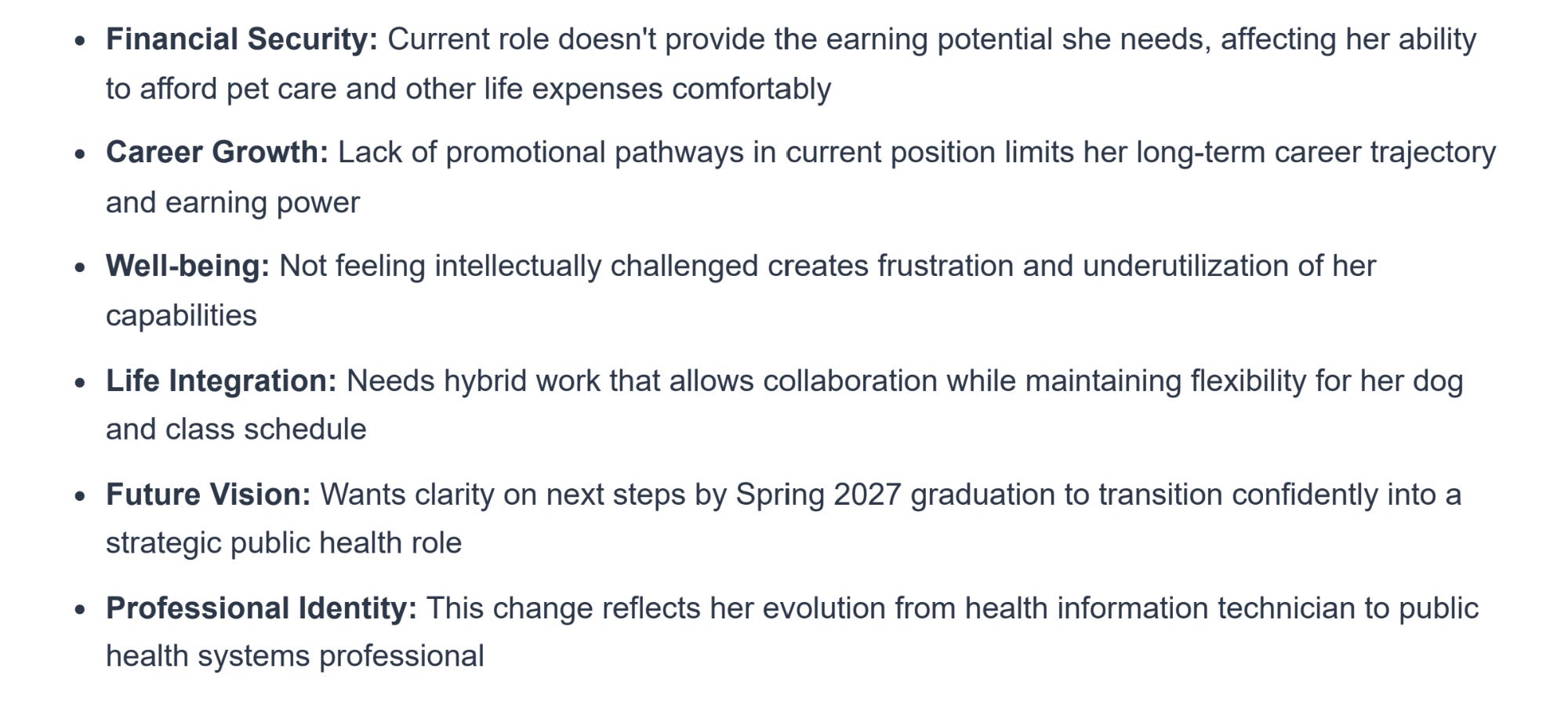
She wanted to explore what options she had post-graduation. After she received her results, I asked if we could chat via Zoom. I had a few follow-up questions about impact, and mainly, was curious if her trajectory or plan had changed.
After Ashley graduated with her associates degree, she secured employment as a medical coder while working toward her bachelor’s degree in chemistry. Though she learned about roles she could work in, like Chief Health Information Officer, she knew the pathway to get there would be limited by an associates – she had an understanding of the job market.
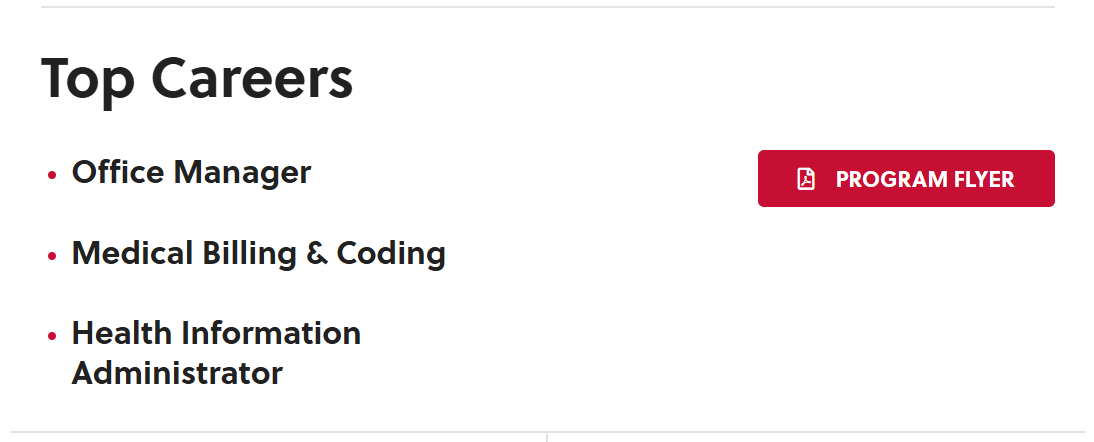
Her familiarity with roles within the public health space came from exposure to her academic community. Within her program, she looked at roles that her professors were in, health economy and specialized programs that were focused in academia, however, that was not the path she wanted to take. Her uncertainty was in finding roles that challenged her and where she could still work with people if public health became her primary plan.
The two roles from her blueprint (career pattern) she gravitated toward were healthcare regulatory compliance analyst and health services research coordinator.
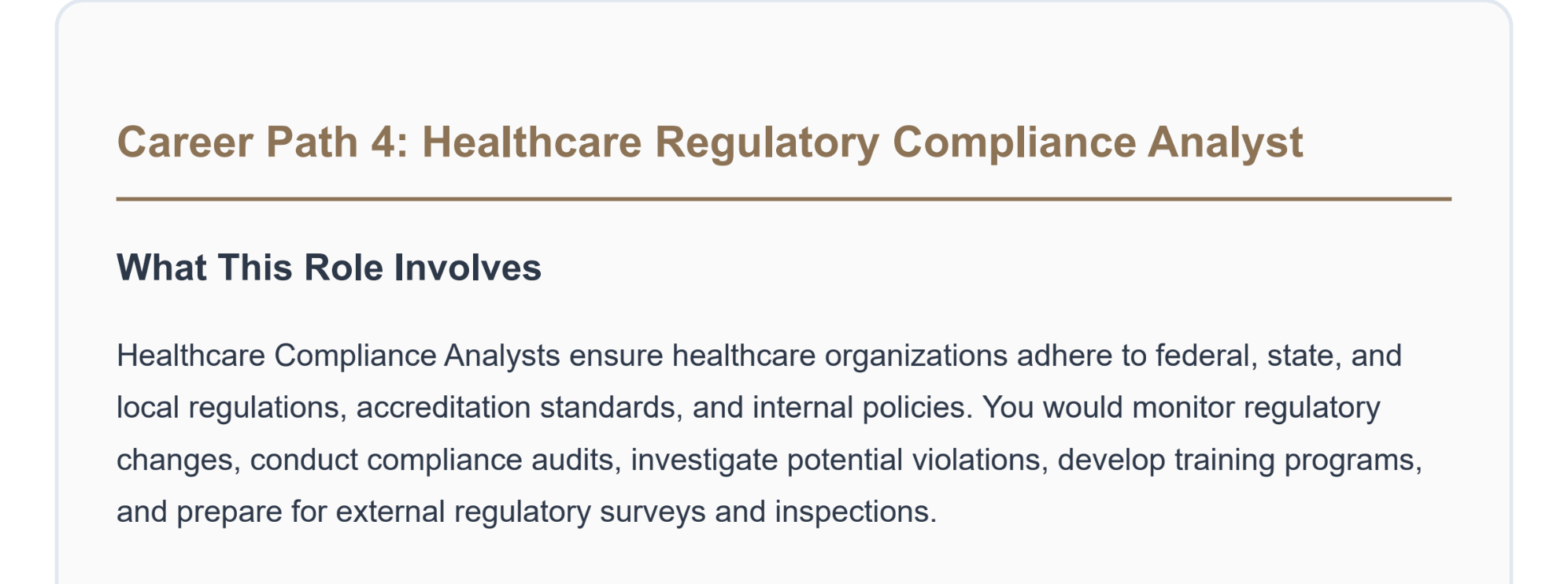
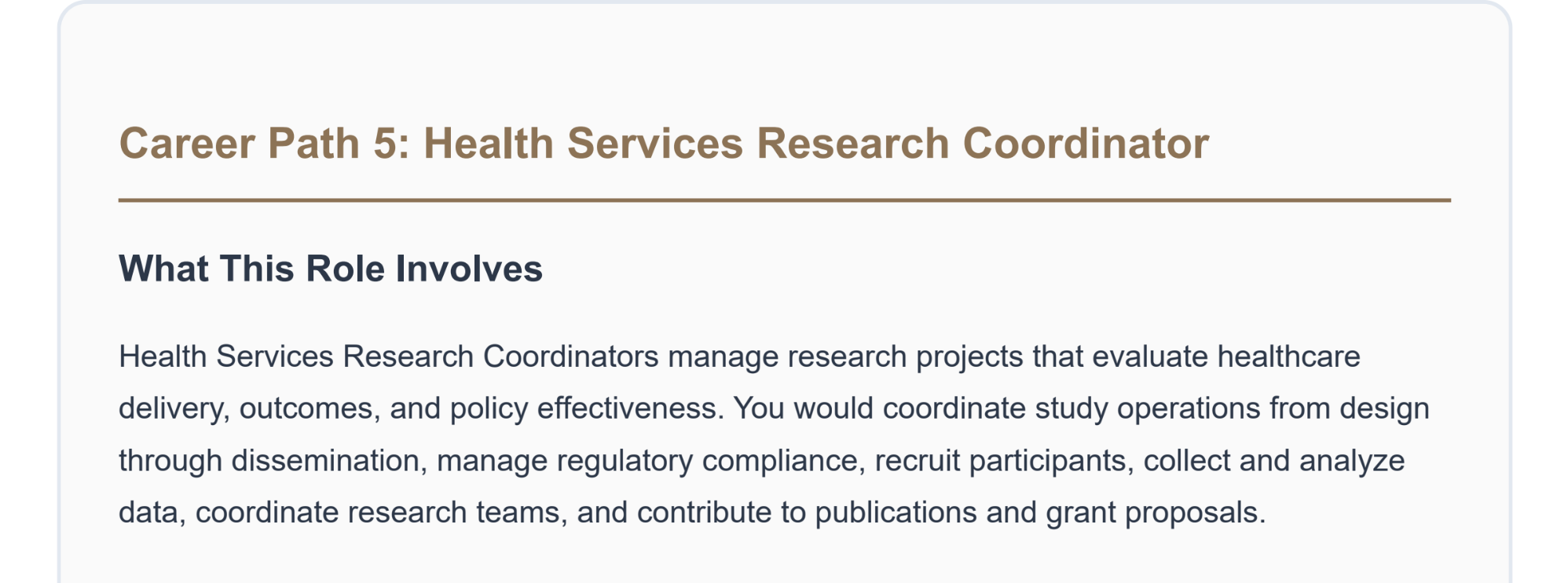
The uncertainty that people face can come from anxiety in the market, but also from not knowing what roles fit, the overwhelm of searching through information, and attempting to figure out what they don’t know. Career services can be the place that helps students navigate this, provide structure to find out about careers through their school website (Ashley mentions Handshake in an audio clip below), and can provide assessments like StrengthsFinder or MBTI.
I wanted to learn how students used career services and how they are currently navigating their transitional spaces. I asked Ashley how she navigated the university’s resources around career development and her needs.
Ashley found her internships, jobs, and career options mainly through professors, and was not sure yet what career services offered. The Colorado School of Public Health is a two-year program and requires a practicum and capstone to graduate. These are often project-based experiences that give the student real-world application of their degree. As a student, you’re navigating coursework, identifying what you would want to do for your capstone and practicum, and then applying for those opportunities, which can be highly competitive. Being a first year graduate student, this may have been Ashley’s focus.
I wanted to learn from students when the best time to take this would be and learn about their own timeline / readiness for exploration and decision-making.
Ashley thought this would be helpful in their first or second semester because it can help steer a student toward their practicum or capstone experience. Around this time, students have a grasp on their course load, schedules, and have a general sense of the program curriculum. Seeing what paths align with students’ needs early on could help them prepare for and identify work-based experiences (projects, internships, capstone) that would set them up for their first role.
Typically, identifying these types of roles might take quite a bit of time. Other students I interviewed noted that counselors might tell them to use tools ChatGPT but they found it difficult or frustrating to prompt in a way that was effective. In Ashley’s survey, she noted that this saved her 3-4 hours of time and I wanted to know what she would have done instead of this.
In the interview, we hear Ashley discuss the fatigue that can come with the decision-making process, even with tools to support like AI. Prompting becomes an additional task or skill that adds to the overwhelm, mix that in with anxiety of the future, confusion on how to get that answer, or even mental fatigue from sorting through too many resources, became a motivator for her to seek out this alternative resource and see what roles were out there. For her, her goal was still intact, to become a doctor – but she was searching for reprieve from the emotional tug of war that comes with figuring out these next steps.
When I asked Ashley what she learned that she didn’t already know, she reflected about the career titles, and in a survey, she indicated significantly increased confidence.
“I definitely started this with a lot of anxiety about what my future will look like and this blueprint eased my stress and showed me good options for me which really is a time saver.”
Ashley’s increased self-confidence and reduction in stress aligns with research that shows how career exploration can enhance career path readiness and perceived employability. Later, she shared that many of the roles in her report had the title “analyst” or “coordinator” and she was curious what else was out there. I made some changes and it helped orient her into the roles.
“I think certain jobs sound interesting but actually aren’t according to the work style. Which is of course my opinion but super helpful.”
My own liminal space: Mirrored journeys
As I listened to Ashley’s story, I recognized how her journey mirrored my own. Like Ashley, I had secured a job in undergrad that had limited growth; part-time employment as a software tester. I remember how excited I was – a “real job” that’s related to my field. I learned a few years in that it was not what I wanted to continue to do. I started to dread work. I was bored.
My dad worked in engineering and I saw the structure of some engineering companies – I saw how he would have to travel for work or what happened when a project ended. It wasn’t the work environment I wanted. I left the software testing role and spent the next few years exploring: occupational therapist, physical therapist, school social worker, physician assistant, and more. I even earned my EMT-Basic certification (that I never used). Eventually, I landed on psychology, knowing I’d attend graduate school.
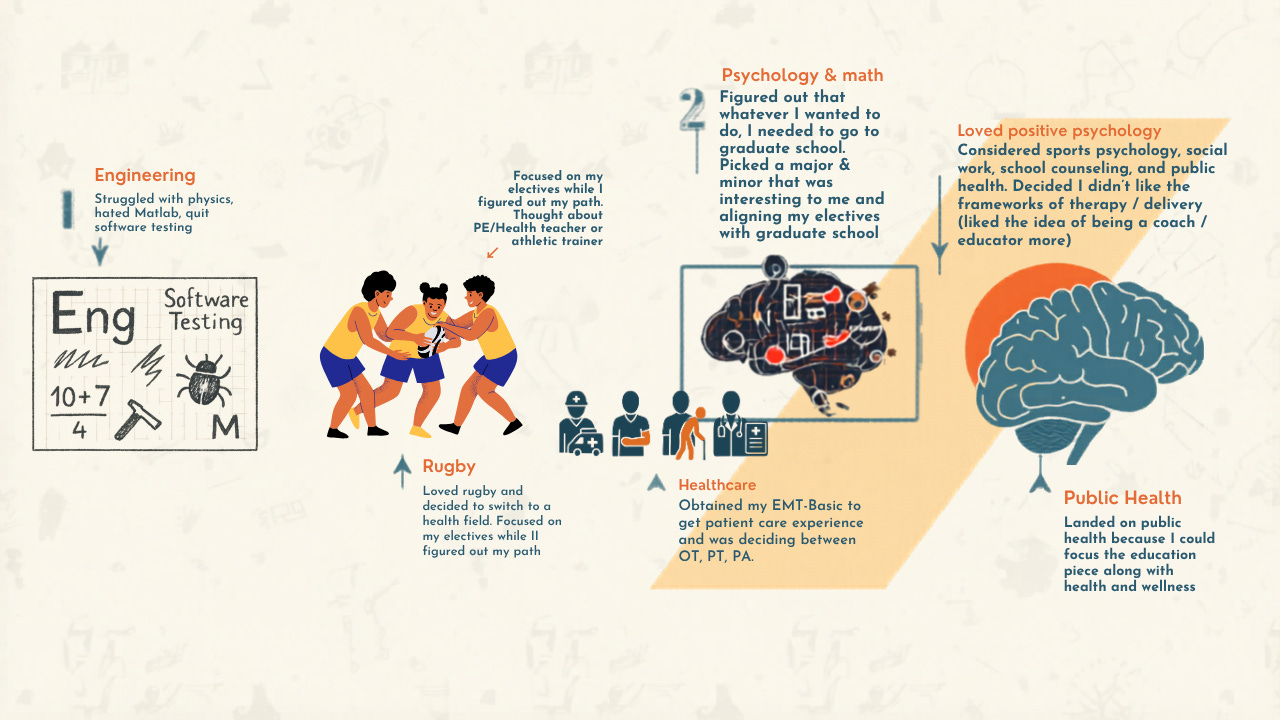
When I finished my Master’s in Public Health in 2016, I had the goal of working in health education and wellness. I landed a job as a wellness specialist at a school district – it was my dream job. I didn’t expect how disorienting the shift would be when it stopped being my dream job. Building connections with people, designing programs that sparked “aha” moments, where people could have fun while learning, was the part that I loved.
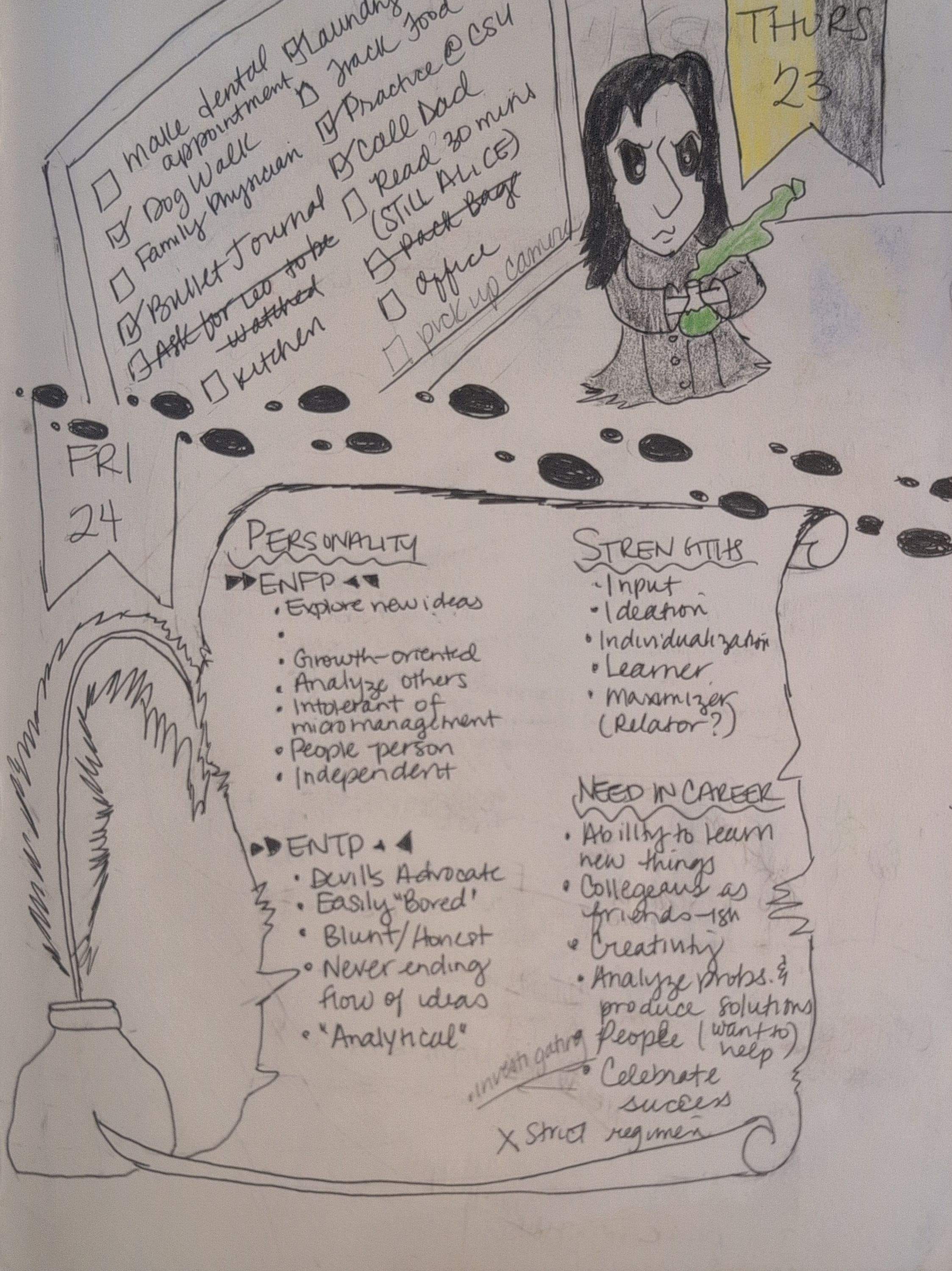
But when I started to scale these programs and received more requests, and without additional funding to support a new hire, I was asked to offload what I loved, the only part I loved, to interns. Giving up what gave me joy in my work, to support a program that mattered, felt dissonant. It was sitting in-between grief and burnout. I did not enjoy administrative tasks and to be honest, was not great at them either. After a lot of reflection and discovery during those three years (through professional development, assessments, and reflection through graphic journaling – shown below), I left the role and shifted to learning design.
Why I built this
Brilliant Patterns was a passion project that came from a place of curiosity and navigating my own transitions. These liminal spaces aren’t going away – people will always be in transition, whether it’s the job market or something else. And those transition spaces teach us a lot about who we are, what we like or don’t like, and gives us opportunities to grow.
The important thing is – people don’t need to navigate this alone, and can find supportive people and communities. Ashley is navigating this space with the support of professors. I navigated it with mentors, coaches, and networking. Both Ashley and I found our way by using online resources, connecting with people, and a bit of reflection. My journey took a couple years to figure out, through experience and connecting with people. Ashley also gravitated toward connecting with people, but by using my AI-supported tool, she has context on how to move forward. I believe when you combine technology and people, these spaces can feel different navigating – less burnout, maybe a little less disorienting, and less stumbling through.
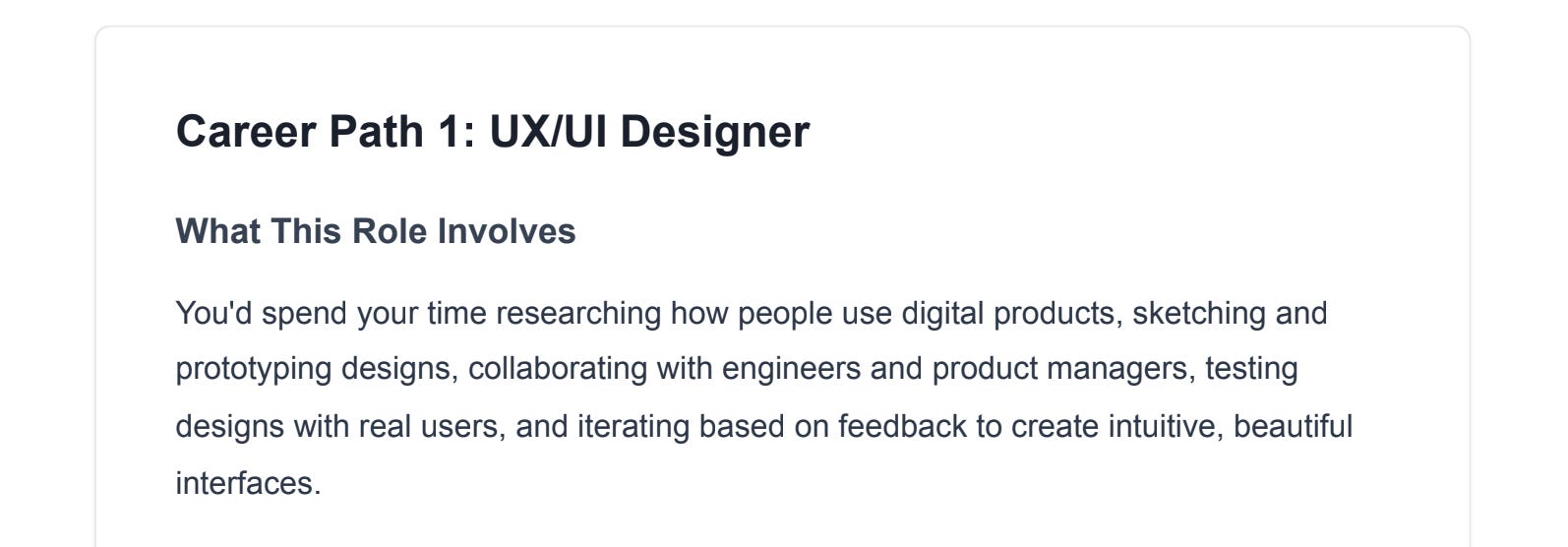
But to be perfectly honest, maybe I needed to stumble. I took my own assessment to see what it would have suggested for a career path, and it depended on what phase of life I was in. If I took this in high school or early college, I might have tried to become a UX designer (though, eventually I did study human-centered design, so it wasn’t completely wrong). I think with all the supportive people I had during that time and my changing interests, I might have gone down the same path and would have added to my toolkit.
So for me, even with the support of AI, I still think that people are the accelerator because people can reveal what you might not know, and people create growth. The stumbling helped me (1) understand that careers evolve, (2) recognize that timing and exposure matter, and (3) connect with amazing professionals along the way.
I’ve had the pleasure of working with a few career coaches who have volunteered their time to me and the importance of surfacing what’s missing or hidden, by asking the right questions, when navigating these spaces was incredibly valuable. For that time period, they might have pointed me to someone to explore if UX design was the right fit, or helped me redefine what ‘career fit’ meant for me.
What’s Next?
I’m currently in my own transitional space building this and am working on partnering with organizations, consultants, and coaches to build capacity for those who might feel stuck. If you’re interested, please give me a shout.